

JAMMY EGGS
Not quite runny, and definitely not hard-boiled

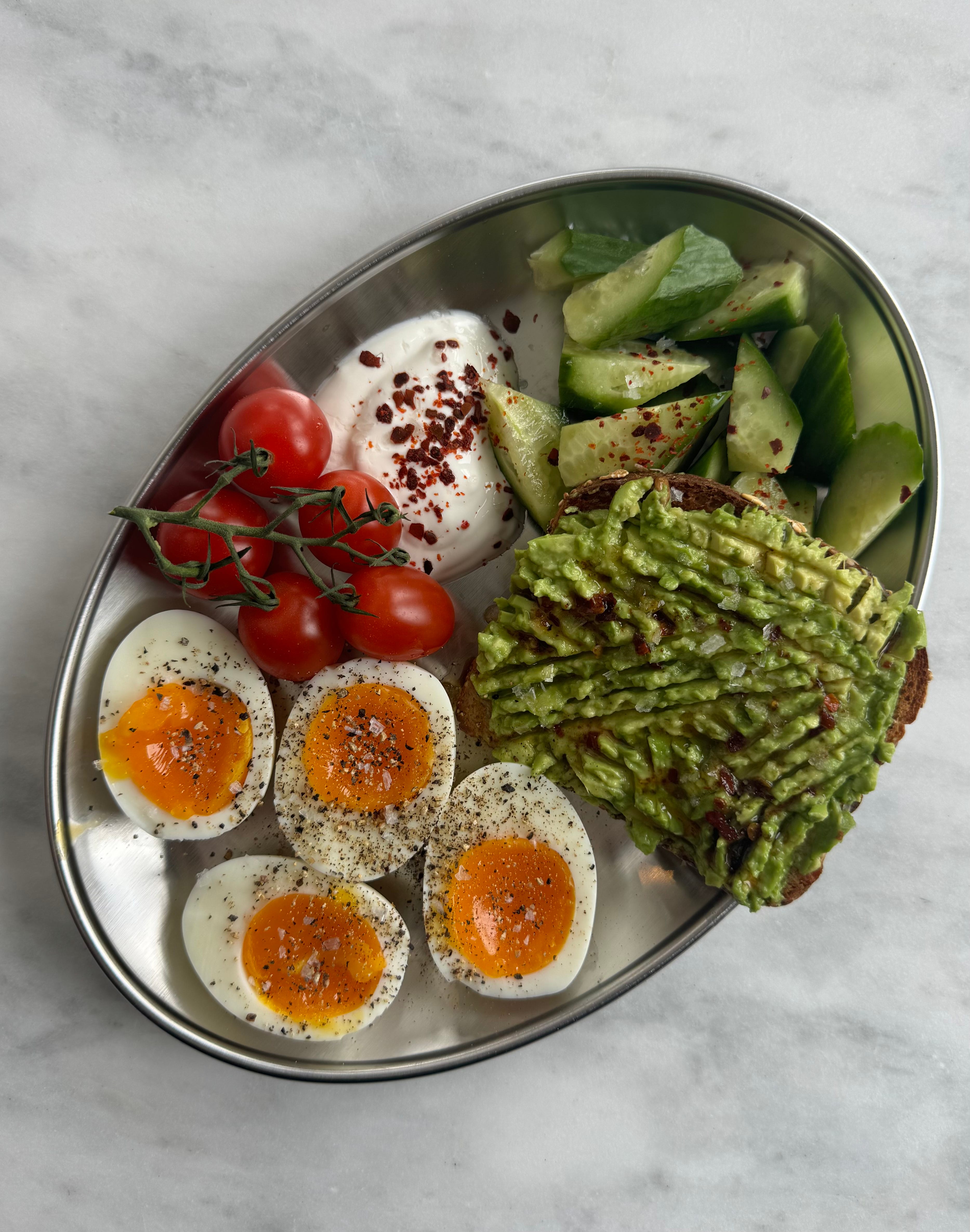
I shared my egg salad sandwich recipe inspired by Turkish eggs, which maximizes the already rich, creamy quality of egg yolks that, in combination with yogurt, results in a perfectly lush egg salad that won’t make you think twice about mayo (something I can’t say confidently for chicken or tuna salad).
I got a few messages asking how to get jammy eggs consistently right. As someone who makes them multiple times a week for breakfast, I feel confident in my technique and have a few takeaways. I’ve outlined it in traditional recipe formatting all the way at the bottom, and with a bit more context below.
TEXTURE
Jammy eggs texturally require a fully set white, so they’re not soft-boiled, and the yolks are mostly just-set and saturated in color, so they’re not hard-boiled. Nothing is wet, rubbery, or powdery. It’s the Goldilocks pick for a boiled egg.
TIME & SIZE
The aforementioned texture is usually achieved within 7 minutes and 30 seconds to 8 minutes and 30 seconds, when using large eggs (55-65g) cooked in water that’s already boiling. The size and number of eggs being boiled at a single time will be the most significant variables to affect the cook on your eggs and the reason why there’s a bit of a range. The more eggs you boil, the longer the water will take to return to a boil, shifting the cook time out a bit. When you cook two eggs, the water takes seconds to return to a boil. I always cook two eggs for 8 minutes as a safe medium that’s in range of the desired texture. Because large eggs vary in size, you may boil one 55g egg and one 65g egg and they will cook to slightly different doneness levels. However, at 8 minutes, both will be set in the white and partially set in the yolk.
AGE
Older eggs are proven to be easier to peel. The membrane that holds the egg and shell together is less fused to the egg than when super fresh. That’s not to say it’s impossible, just harder to coax the shell off and will require a bit more patience when peeling. I usually buy a new batch of eggs when I have about 4 left in my current crate to give the new ones some time to age.
DRAINING & PEELING
This is where I feel my technique differs from most I’ve seen. In my mind, the only reason for an ice bath is to quickly reduce the temperature for consumption (as is the case for egg salad). Otherwise, ideally, I’m eating warm eggs. Beyond that, while rapidly chilling the eggs in an ice bath does offer a hard stop on the cooking, I’ve found that sometimes it also creates an opportunity for the membrane to almost re-fuse to the egg’s flesh, making it harder to peel. And, if you needed another reason to skip it, who wants extra dishes?
Instead, once my 8 minute timer goes off, I cut the heat, wrap a towel around the handle of my pot, and carefully walk it over to the sink to drain off the hot water. Then I refill the pot with cool water to reduce the temperature of the egg so it’s cool enough to handle but still warm once I’ve peeled it.
Peeling it is usually a simple task if I’m using older eggs. I’ll firmly tap the eggs on the counter doing my best to center it, meaning I’m not tapping the very top or bottom of my egg. I continue to tap as I rotate, and once I’ve cracked the shell all the way around, I’ll begin picking off a few small bits of shell, making sure to puncture through the thin milky membrane that’s fused between the egg and shell. Once the film has been separated from the egg, it’s much easier to peel the egg in large pieces. I usually peel directly over the pot of water (letting the shells collect in the pot), drain the water, and shake the peels into the trash.
Before we get into the recipe, a quick note: I hope to keep this newsletter free for as long as possible, so it would mean so much to me if you supported my work by ordering my cookbook, Third Culture Cooking, which features 100+ flavorful recipes that reflect my third culture perspective. Find signed copies here.
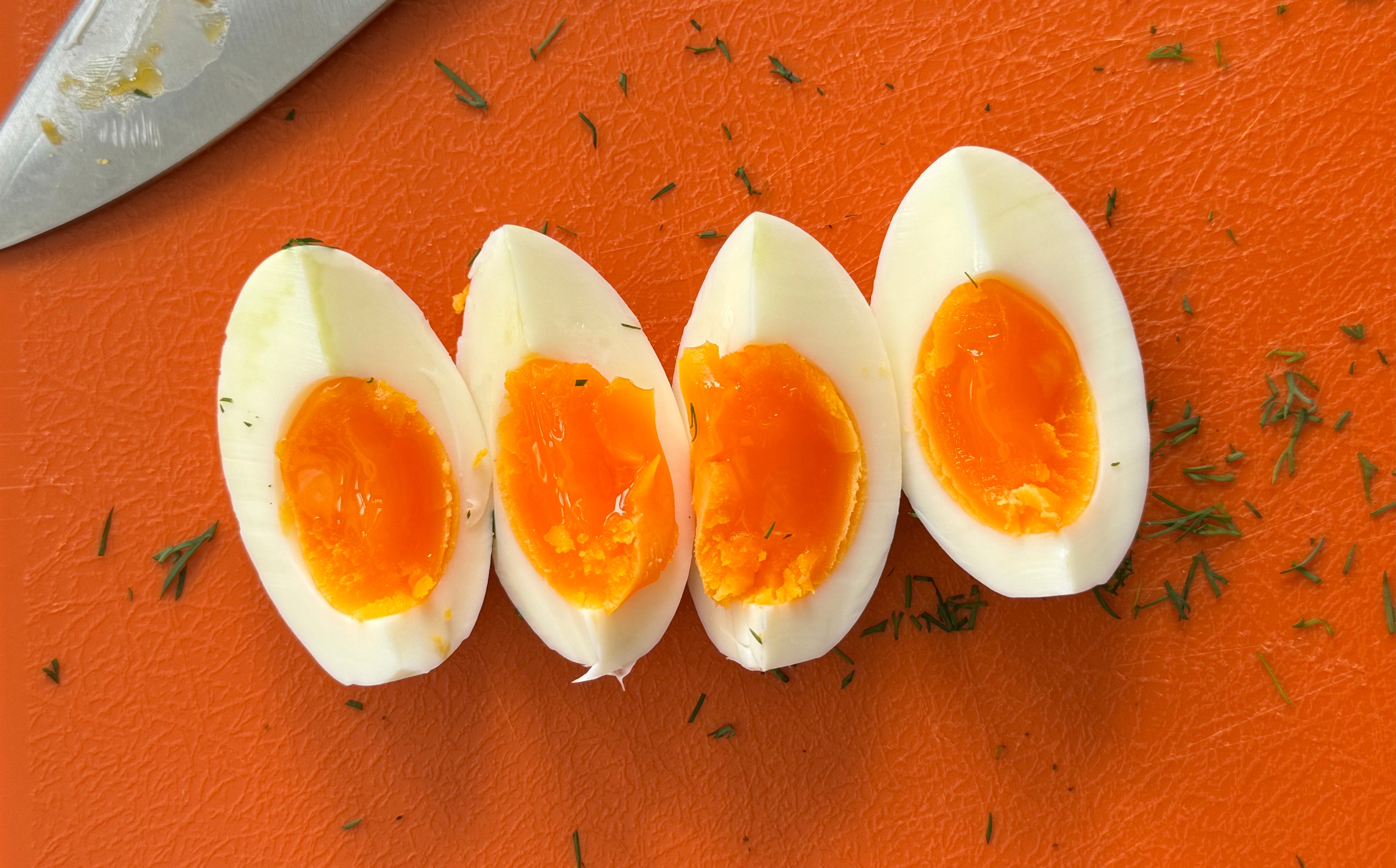
1 SERVING / 15 MINUTES
INGREDIENTS
Water
2 large eggs, cold from the refrigerator
Salt, pepper, sumac, and/or chili flakes, for serving
METHOD
Fill a small pot with water and bring to a boil over high heat. Using a slotted spoon or spider, gently lower the eggs into the boiling water. Set a timer for 8 minutes. Carefully transfer the pot over to the sink and drain out the water, leaving the eggs behind. Run the tap with cool water and fill the pot to cover the eggs. Let stand for 15-30 seconds or until the eggs are just cool enough to handle. Remove from water and dry off with a towel if desired. Working with one at a time, firmly tap the egg on the counter in the center, continuing to tap as you rotate it around its equator. Pull off a few small bits of shell, making sure to puncture through the thin milky membrane. Once the film has been separated from the egg, you’ll be able to peel the egg in larger pieces. Repeat with the other egg. Discard the shells and transfer the peeled eggs to a plate, cut them in half, and season with flaky sea salt and black pepper and/or sumac and chili flakes. Serve immediately.
This came up on my google search for jammy egg recipes and I’m happy to report they were delicious. Thank you.
Love love all your recipes and I also love cooking from your third culture cookbook which I ordered on Amazon last year!!!